


Optimized manufacturing workflows and vast economies of scale yield highly competitive pricing across diversified asset classes.

A versatile export ecosystem spanning world-class pharmaceuticals (the "Pharmacy of the World," supplying 20% of global generics), advanced automotive components, precision engineering, premium agro-commodities and spices, sustainable apparel, gems and jewellery, and luxury handicrafts.

A vast pool of technical experts, engineers, master artisans, and agri-specialists delivering unmatched precision, deep domain knowledge, and world-class craftsmanship from the field to the factory.

Forward-looking, export-centric government policies, specialized economic zones (SEZs), and robust production incentives maximize cost-efficiency for international buyers.

A rapidly expanding network of 13 major ports ably supported by advanced multimodal transport networks, dedicated freight corridors (DFCs) and a vast, professional workforce simplify cross-border transactions and supply chain alignment.
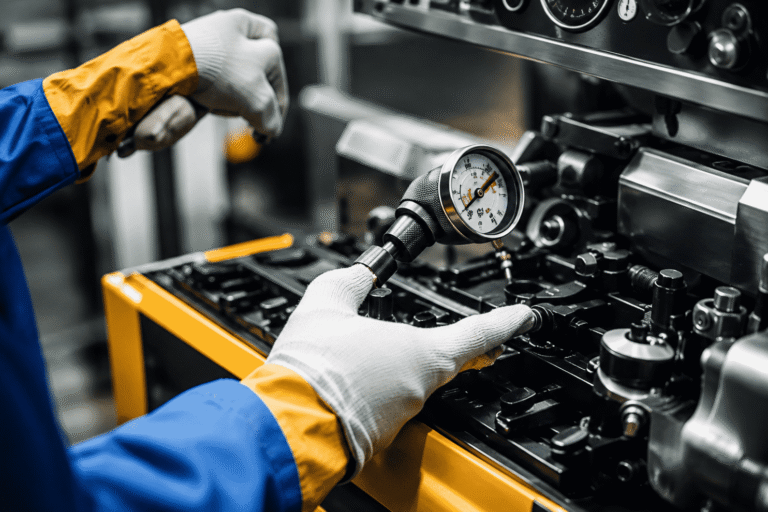
India has evolved from an assembly model to an ecosystem driven by proprietary design and deep tech innovation.
specialized units focus on high-precision machining
Semiconductor Mission
Engineering Research & Development (ER&D)
Over 8,000 specialized units focus on high-precision machining, actively serving global aerospace, defense, and automotive tier-1 suppliers.
Standing as the world’s second-largest mobile producer, India is scaling full-stack chip design and commercial fabrication under Semiconductor Mission 2.0. High-tech manufacturing infrastructure is rapidly expanding with major fabrication facilities currently active and operational.
Engineering Research & Development (ER&D) now commands 27% of India’s technology exports, marking a decisive shift toward global platform leadership and “Make for the World” innovation.
Indian handicrafts seamlessly merge heritage aesthetics with tech-driven design and institutional scaling, rendering local art instantly accessible to global luxury curators.
Ethically sourced, entirely biodegradable, and carbon-neutral, Indian handicrafts serve as a primary choice for global enterprises seeking to fulfill stringent Environmental, Social, and Governance (ESG) compliance.

India’s mastery of craft lies in its unique ability to marry ancient technical precision with modern luxury standards. These products are high-value, structurally complex exports that cannot be replicated at scale elsewhere.

Exemplified by traditional Chola metal art, the precise alloy engineering of Gold, Silver, Copper, Zinc, and Iron ensures centuries of corrosion resistance and structural integrity.

Comprehensive GI tagging guarantees that international buyers receive authentic, certified, and lab-tested metallurgical and artistic standards, fully protected against industrial imitations.
Indian handlooms represent the pinnacle of manual dexterity and complex textile engineering, positioned globally as icons of Haute Couture and Bespoke Luxury.
Legendary techniques such as Paithani, Banarasi, Patola, Jamdani, and Kanjeevaram demand intricate, mathematical thread-counting that automated power looms cannot replicate without compromising the fabric’s distinct breathability, texture, and soul.
India’s historic mastery of natural dye extraction (using indigo, madder root, and turmeric) provides international couture houses with non-toxic, eco-friendly, and biodegradable alternatives to synthetic chemicals.
While retaining artisanal authenticity, modern processing units ensure absolute color-tone uniformity and structural quality standards across large-volume commercial consignments.
Customs processing windows operate around the clock across 9 primary maritime gateways, which works in tandem with DPD systems handling 74% of port volume to ensure minimal transit congestion.
Globally compliant Safe Harbor provisions and fast-tracked Advance Pricing Agreements (APAs) provide rigorous fiscal and legal legal certainty for multinational trade partnerships.
Through the deployment of Port Community Systems and comprehensive digital customs, India offers end-to-end data integrity. Rapid adoption of Environmental, Social, and Governance (ESG) frameworks guarantees that Indian exports satisfy the most stringent import compliance needs of EU, UK, and North American markets.
India’s maritime sector has undergone a "transformative shift" making it one of the most efficient in the world.
India’s sector-specific transit architecture guarantees that premium goods move from field and factory to global markets with unprecedented speed.
Major maritime gateways have compressed Vessel Turnaround Times (TAT) to an historic low of 0.9 days. This aggressive timeline ensures that perishable agricultural consignments and time-sensitive luxury handicrafts outpace international competition to reach global shelves faster.
Container handling efficiency has surged by 70% over the past decade. This expansion is anchored by Direct Port Delivery (DPD) pipelines that route nearly three-quarters of all port traffic seamlessly, eliminating local storage bottlenecks for high-value export containers.
India’s strategic air cargo network scaled rapidly to register a record throughput of 3.72 million metric tonnes (MMT) in the recent fiscal cycle, catering perfectly to just-in-time international delivery models.
This revolutionary national master framework digitally harmonizes air freight corridors with robust road and rail corridors. By financing 35 advanced Multimodal Logistics Parks (MMLPs), it secures friction-free, end-to-end data tracking and reliable cargo transfers for overseas buyers.
India’s sector-specific transit architecture guarantees that premium goods move from field and factory to global markets with unprecedented speed.
| METRIC | INDIA'S ACHIEVEMENT (2025-26) | GLOBAL CONTEXT |
|---|---|---|
| Turnaround Time (TAT) | 0.9 Days (Average) | Faster than Singapore (1.0), Germany (1.3), and USA (1.5) |
| Container Dwell Time | <3 Days (Average) | Beats UAE (4 days), USA (7 days), and Germany (10 days) |
| Cargo Handling | 915.17 Million Tonnes | Record high in FY26, surpassing all previous annual targets |
| Global Ranking | 9 Ports in Top 100 | Up from only 3 ports in 2020; Visakhapatnam is now a top 20 container port |